Batch Coding Machines Tanzania
Technogen Enterprise offers Batch Coding Machines for Tanzania for pharmaceutical, food, beverage, cosmetic, chemical, nutraceutical and allied packaging applications requiring variable information to be printed on cartons, labels, pouches, bottles or other compatible packaging materials. As a Batch Coding Machine Manufacturer and Supplier for Tanzania, we provide equipment designed to support batch identification, manufacturing-date printing, expiry-date printing and other variable coding requirements according to the customer's production process.
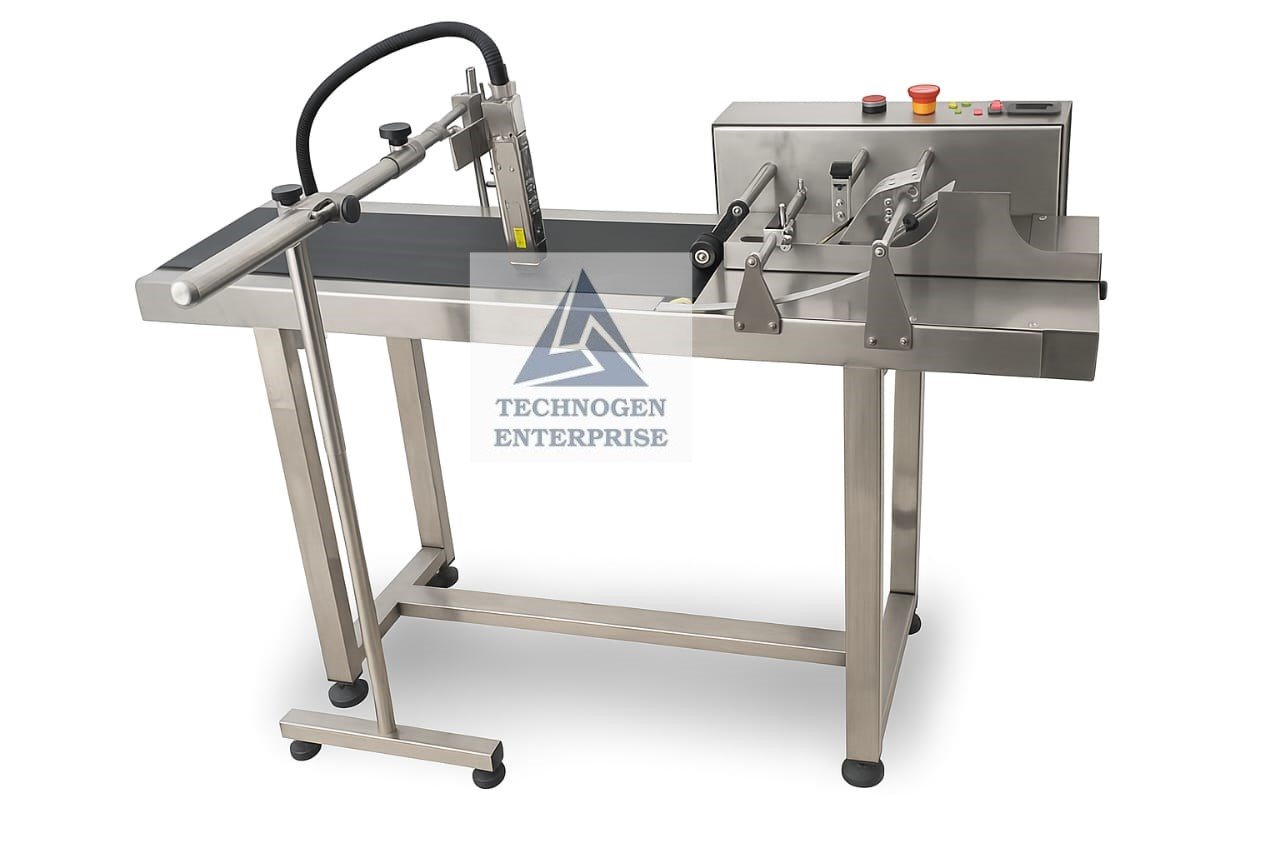
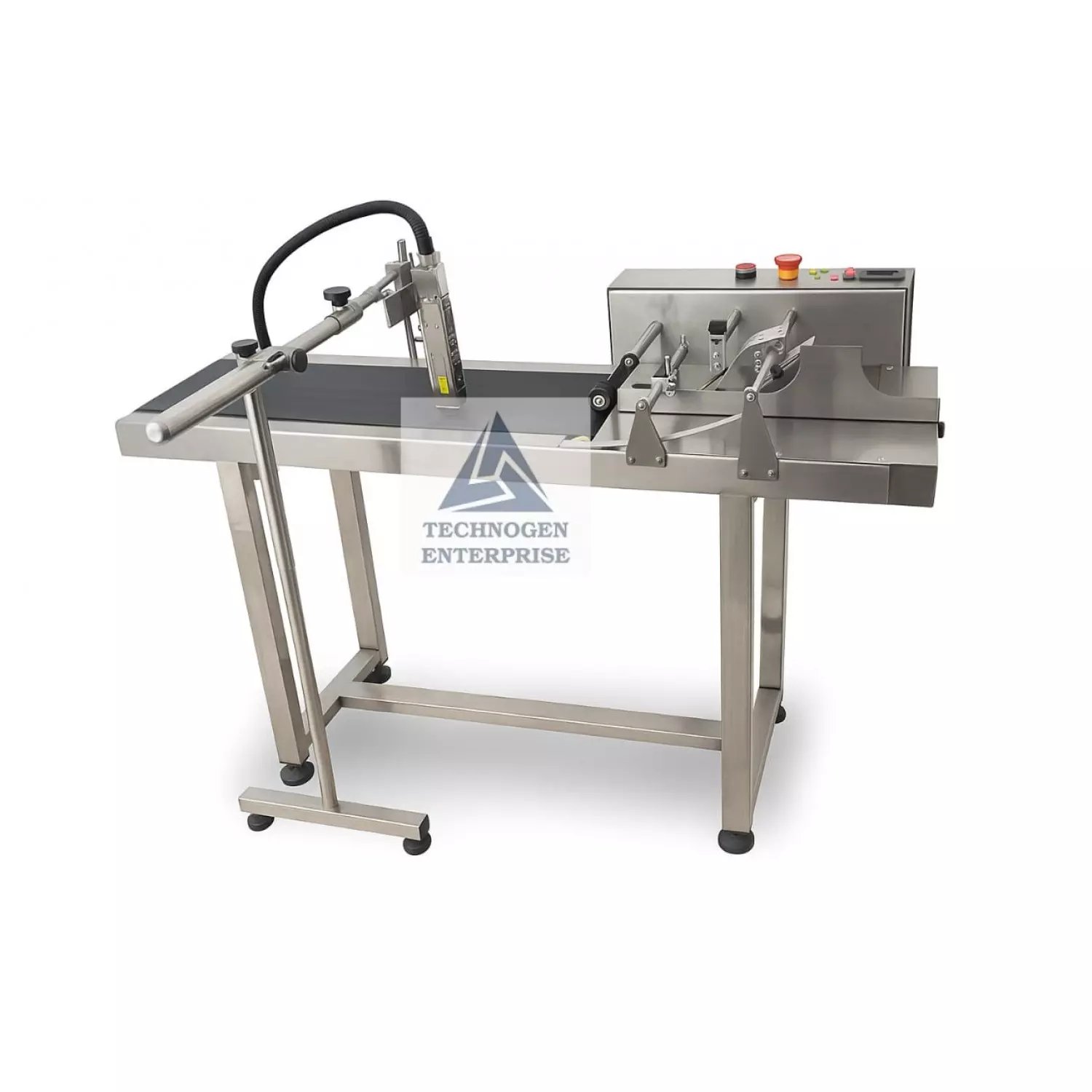
The current range includes the Automatic Feeder Machine With Thermal Inkjet Printer. This system combines automatic product feeding with thermal inkjet printing to support continuous coding of suitable flat or semi-flat packaging materials.
The correct coding system should be selected according to the packaging material, print area, required text or data, production speed and the way products are presented to the printer.
How Batch Coding Works
Batch coding involves printing variable production information onto the product package or label during or after the packaging process.
Depending on the application, the printed information may include batch number, manufacturing date, expiry date, lot number, production code or other traceability information.
In a thermal inkjet system, ink is ejected through fine nozzles in the printhead to form text, numbers, symbols or other supported information on the packaging surface.
For reliable printing, the product must pass the printhead at a stable distance and consistent orientation.
Automatic Feeder Machine With Thermal Inkjet Printer
The Automatic Feeder Machine With Thermal Inkjet Printer is designed for continuous coding of compatible packaging materials that can be separated and fed individually through the machine.
The feeder presents each item to the thermal inkjet printer in a controlled sequence so that the required code can be applied consistently.
This arrangement can be suitable for cartons, cards, labels, sleeves, pouches or other compatible flat packaging components depending on the machine configuration and material characteristics.
The feeder speed and printer settings should be coordinated with the product size and desired production output.
Thermal Inkjet Printing Technology
Thermal inkjet printing provides a non-contact method for applying variable information to compatible packaging surfaces.
Because the printhead does not need to physically touch the product, the system can be useful for a range of materials where contact-based coding is undesirable or impractical.
Print quality depends on the surface, ink type, printhead distance and product movement.
Smooth and absorbent materials may behave differently from coated, glossy or non-porous surfaces, so the packaging material should be evaluated before the coding system is finalised.
Packaging Material Compatibility
The success of batch coding depends on compatibility between the printer ink and the packaging surface.
Important factors include material type, surface finish, coating, porosity and the location where the code will be printed.
Customers should provide samples of the actual carton, label, pouch or packaging material whenever possible.
The print area should also be clearly defined so that the feeder and printhead can be positioned appropriately.
If several package formats will be coded on the same system, their complete size range should be evaluated at the project stage.
Applications of Batch Coding Machines
Batch coding systems can be used across pharmaceutical, food, beverage, cosmetic, chemical, nutraceutical and consumer-product packaging.
Potential applications include coding on cartons, labels, pouches, sleeves and other compatible packaging materials.
The machine can support variable production information used for traceability and product identification.
Actual suitability depends on the material, required print content and line speed, so customers should define the complete coding requirement before machine selection.
Standalone Coding vs. Line Integration
A batch coding system can operate as a standalone unit or form part of a broader packaging line.
With an automatic feeder, individual packaging components can be coded before they enter the main packing process.
In other applications, coding may be integrated directly with labeling, carton sealing or conveyor systems.
The preferred arrangement depends on the material being coded and where the variable information needs to appear within the production sequence.
Selecting Batch Coding Equipment for Tanzania
For projects in Dar es Salaam, Dodoma, Mwanza, Arusha, Morogoro and other industrial locations across Tanzania, customers should provide complete packaging and coding information before machine selection.
Important details include packaging material, product dimensions, print area, required information, number of print lines and target production speed.
Customers should also confirm whether the machine will be used as a standalone feeder-and-printer system or integrated with another packaging process.
Representative packaging samples can help Technogen evaluate print quality, feeding behaviour and machine configuration more accurately.
Batch Coding Machine Manufacturer and Supplier for Tanzania
Technogen Enterprise supports pharmaceutical manufacturers, food processors, beverage companies, cosmetic producers, chemical manufacturers, packaging firms and procurement teams looking for a reliable Batch Coding Machine Manufacturer and Supplier for Tanzania.
The Automatic Feeder Machine With Thermal Inkjet Printer can be evaluated according to the packaging material, required print content and production capacity.
Customers can share their packaging samples, coding details and target output so Technogen can evaluate an appropriate batch coding solution for their project in Tanzania.