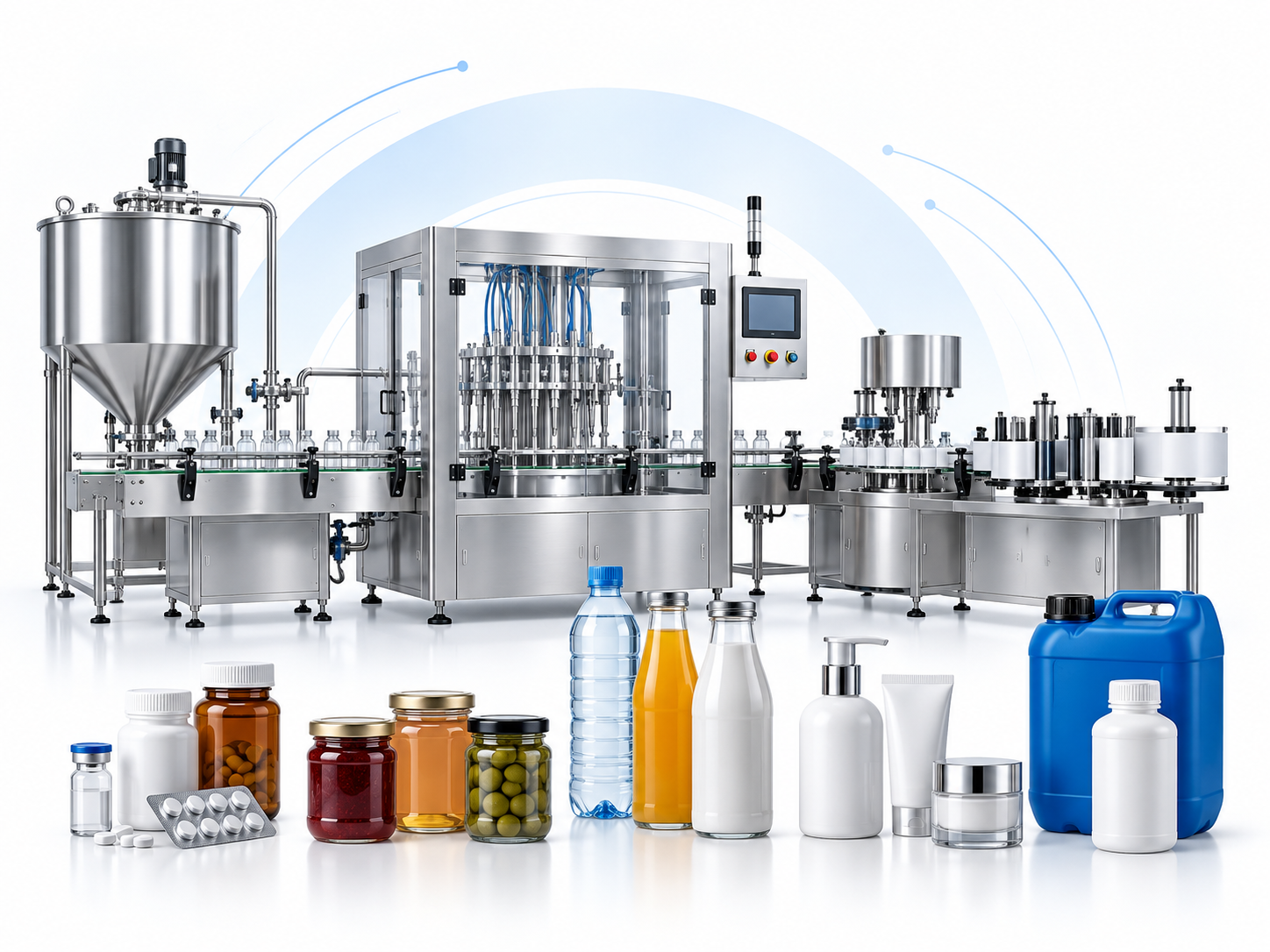
Drinking Mineral Water Filling Machine Tanzania
Technogen Enterprise offers Drinking Mineral Water Filling Machines for Tanzania for packaged drinking water and mineral water bottling applications. As a Drinking Mineral Water Filling Machine Manufacturer and Supplier for Tanzania, we provide integrated rinsing, filling and capping solutions for standard water bottles as well as larger 20-liter jar packaging requirements.
The range includes the Rinsing Filling Capping (RFC) Water Bottle Machine and Automatic Mineral Water 20 Liter Jar Rinsing Filling Capping Machine. These machines address two distinctly different packaging formats: conventional water bottles and large returnable or compatible 20-liter water jars.
The appropriate machine should therefore be selected according to the container type, bottle or jar capacity, closure design, required production speed and overall water bottling-line configuration.
How RFC Water Filling Technology Works
RFC refers to Rinsing, Filling and Capping, combining the three major bottle-handling operations within one coordinated machine or integrated system.
Empty bottles or containers first enter the rinsing section, where they are prepared according to the machine's washing arrangement. They then move to the filling section, where drinking water is dispensed into the container.
After filling, the container proceeds directly to the capping section, where a compatible closure is applied before the finished bottle moves toward downstream labeling, coding and secondary packaging operations.
Combining these processes helps reduce unnecessary intermediate bottle handling and supports continuous production.
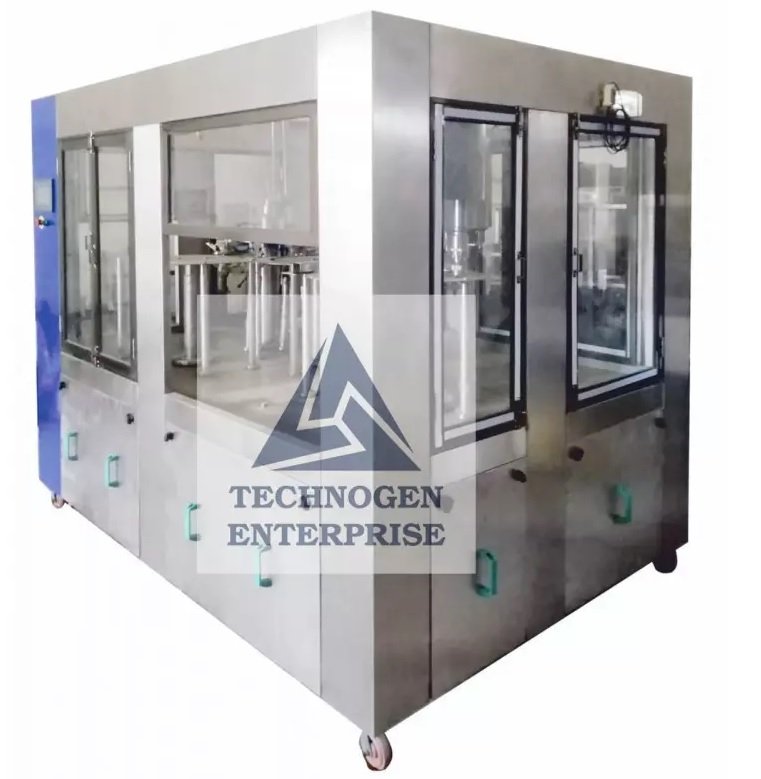
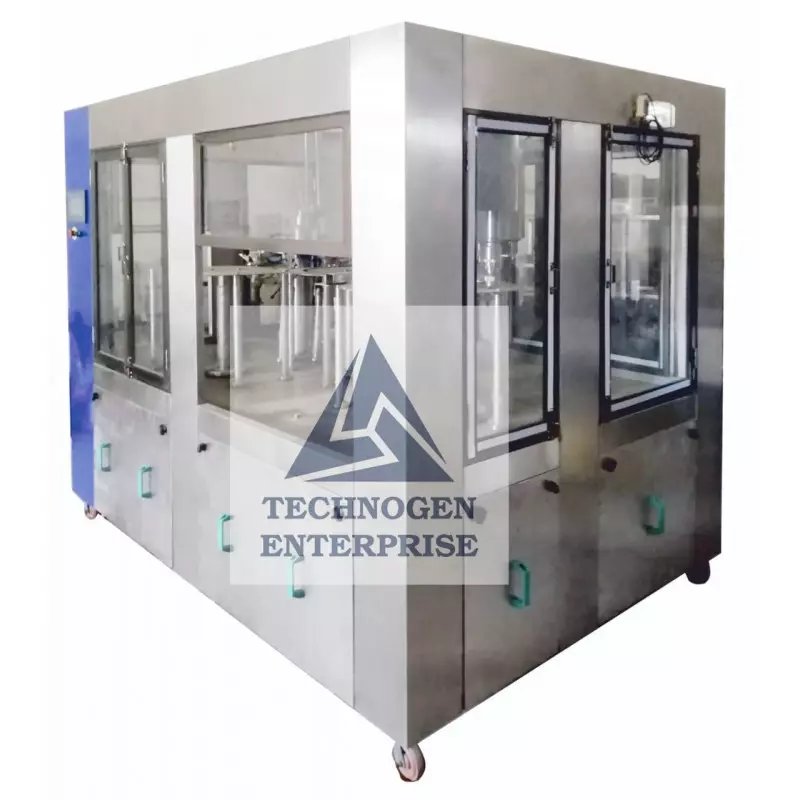
Rinsing Filling Capping (RFC) Water Bottle Machine
The Rinsing Filling Capping (RFC) Water Bottle Machine is intended for automatic packaged drinking water production using compatible bottles.
The machine coordinates bottle rinsing, water filling and capping within a continuous production sequence. This arrangement is particularly suitable for bottling operations where stable bottle transfer and consistent production flow are required.
Machine configuration should be selected according to bottle capacity, bottle material, neck specification, cap type and required production output.
Where multiple bottle sizes are planned, the complete bottle range should be evaluated so that adjustment and changeover requirements can be considered before finalising the equipment.
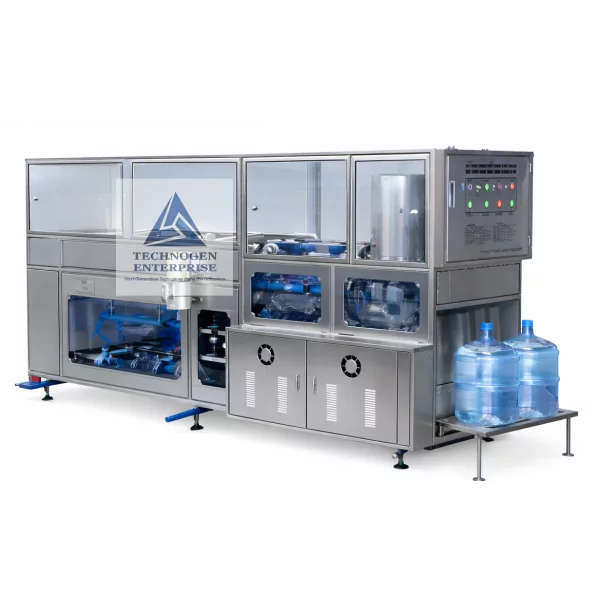
Automatic Mineral Water 20 Liter Jar Rinsing Filling Capping Machine
The Automatic Mineral Water 20 Liter Jar Rinsing Filling Capping Machine is designed specifically for large-format drinking water jars.
Twenty-liter jars require a different handling approach from conventional small water bottles because the containers are substantially larger and heavier. Washing, filling, capping and transfer systems therefore need to be configured specifically for the jar format.
This machine can support an organised production sequence in which compatible jars are rinsed, filled with drinking water and capped before discharge.
Jar dimensions, neck design, cap specification and expected production capacity should be confirmed before machine selection.
Bottle Filling vs. 20 Liter Jar Filling
The two machines within this category serve different water-packaging operations.
The RFC Water Bottle Machine is suitable for conventional bottled-water production using smaller individual bottles, while the 20 Liter Jar RFC Machine is intended specifically for large drinking-water jars.
These machine types should not be selected purely on filling volume. Container handling, cap application, conveyor arrangement and production method are fundamentally different.
A bottling company producing both small bottles and 20-liter jars may therefore require separate machinery for the two packaging formats.
Container and Cap Compatibility
Reliable water bottling depends on correct compatibility between the container, cap and machine handling system.
Important parameters include bottle or jar material, capacity, height, diameter, neck dimensions and closure type.
For lightweight bottles, stable handling is particularly important during high-speed transfer. Large jars require a more robust handling arrangement due to their dimensions and filled weight.
Physical samples or accurate container drawings are helpful when evaluating the machine and any required change parts.
Drinking Water Bottling Applications
These machines are suitable for packaged drinking water and mineral water bottling projects using compatible containers.
The equipment can be considered for water bottling companies, packaged drinking water manufacturers and industrial projects requiring automatic container rinsing, filling and capping.
Machine selection should be based on the complete packaging requirement rather than water filling alone.
Customers planning a new facility should also consider downstream operations such as labeling, coding, shrink wrapping and carton or bundle packing according to their final packaging format.
Integration with a Complete Water Bottling Line
A drinking water RFC machine can form the central section of a broader bottling line.
Depending on the project, upstream operations may include bottle or jar handling and preparation, while downstream equipment can include labeling machines, coding equipment, shrink sleeve systems, shrink wrapping machines and other secondary packaging equipment.
The production capacities of these machines should be coordinated to maintain a balanced line.
Available factory space, conveyor arrangement, container accumulation and operator access should also be considered when planning the complete water bottling system.
Selecting a Drinking Mineral Water Filling Machine for Tanzania
For water bottling projects in Dar es Salaam, Dodoma, Mwanza, Arusha, Morogoro and other industrial locations across Tanzania, customers should first confirm their intended container format and production capacity.
For bottled-water projects, important information includes bottle volume, bottle material, neck dimensions, cap specification and required bottles per hour or bottles per minute.
For 20-liter jar projects, customers should provide jar dimensions, neck and cap details, required production output and information about the jar-handling process.
Bottle or jar samples, photographs and technical drawings can help in evaluating the machine configuration more accurately.
Customers should also indicate whether they require only the RFC machine or are planning a more complete drinking water filling and packaging line.
Drinking Mineral Water Filling Machine Manufacturer and Supplier for Tanzania
Technogen Enterprise supports packaged drinking water producers, bottling companies, engineering firms, project consultants and procurement teams looking for a reliable Drinking Mineral Water Filling Machine Manufacturer and Supplier for Tanzania.
With solutions for both conventional water bottles and 20-liter drinking water jars, the appropriate machine can be selected according to container format, required production capacity and level of automation.
Customers can share their bottle or jar specifications, cap details and target output so Technogen can evaluate an appropriate rinsing, filling and capping solution for their drinking water project in Tanzania.